

Hair Loss & Alopecia (CCCA)
Hair Loss & Alopecia (CCCA)
-
Hair loss can be emotionally devastating — and for many Black women, it's a condition that has been dismissed, minimized, or simply missed at the dermatologist's office for years. Dr. Christina Marcelus is a board-certified dermatologist in Atlanta, Georgia, with specialized clinical expertise in hair loss and scalp disorders — including central centrifugal cicatricial alopecia (CCCA), traction alopecia, alopecia areata, androgenetic alopecia, and telogen effluvium. Cutis MD Dermatology serves patients throughout Vinings, Buckhead, Cumberland, and greater Atlanta, with in-person and virtual appointments available throughout Georgia.
What is central centrifugal cicatricial alopecia (CCCA)?
CCCA is the most common form of scarring hair loss in Black women — and one of the most underrecognized conditions in all of dermatology. It typically begins at the crown of the scalp and slowly spreads outward in a centrifugal pattern, destroying hair follicles permanently as it progresses. Because the follicle itself is destroyed, hair in affected areas cannot grow back. Early diagnosis and treatment are not optional — they are the difference between preserving your hair and losing it.
Early signs of CCCA include sensitivity or tenderness at the crown, a gradual change in texture or density in the central scalp, itching or burning, and small patches of hair loss that initially go unnoticed. Many patients are told the changes are normal, stress-related, or due to protective styles — and spend years without an accurate diagnosis or any treatment.
Traction alopecia
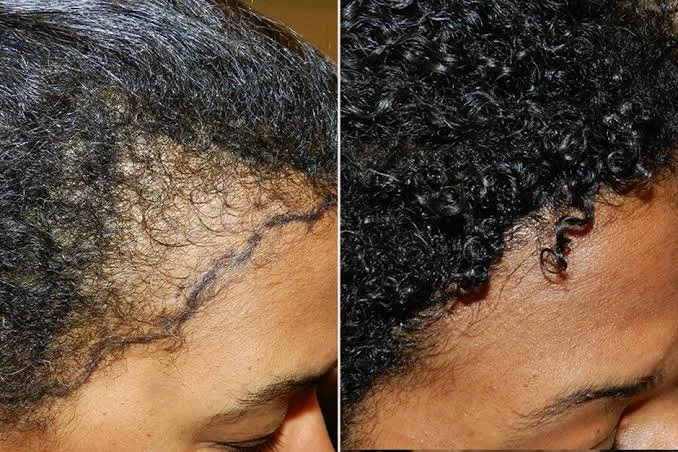
Traction alopecia results from prolonged or repeated tension applied to the hairline and scalp — most commonly from tight braids, weaves, extensions, ponytails, loc styles, or repeated heat and chemical damage. It presents as thinning or hair loss along the frontal hairline, temples, and nape of the neck, often with small follicular papules or redness in early stages.
Unlike CCCA, traction alopecia is non-scarring in its early and moderate stages — which means that with timely treatment and style modification, significant or complete regrowth is possible. In long-standing or severe cases, permanent scarring can develop. As with CCCA, earlier intervention produces dramatically better outcomes.
Other types of hair loss Dr. Marcelus treats
Cutis MD evaluates and treats the full spectrum of hair loss conditions, including:
Androgenetic alopecia (female pattern hair loss)
Alopecia areata and totalis
Telogen effluvium from illness, postpartum changes, nutritional deficiencies, or stress
Frontal fibrosing alopecia
Seborrheic dermatitis and scalp inflammation contributing to shedding
Postpartum hair loss
Treatment options
Treatment at Cutis MD is individualized based on your diagnosis, stage, scalp health, and history with prior treatments. Options may include:
Topical therapies including minoxidil, corticosteroids, and anti-inflammatory agents applied directly to the scalp
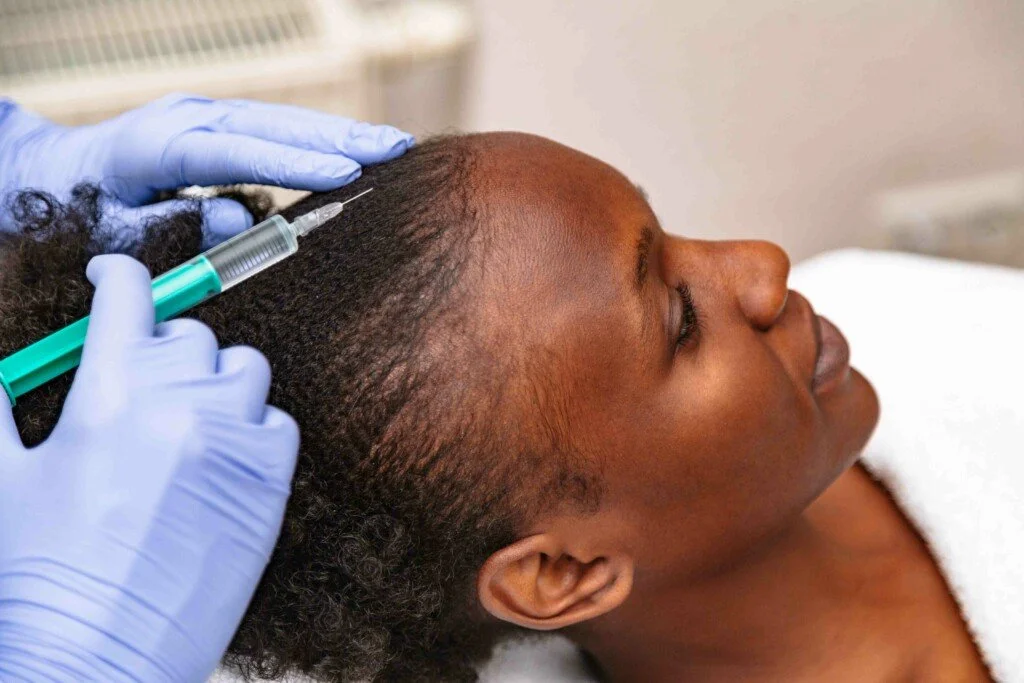
Intralesional corticosteroid injections into active areas of inflammation or early scarring
Oral medications including spironolactone, finasteride where appropriate, hydroxychloroquine, and tetracycline antibiotics for inflammatory and scarring conditions
Platelet-rich plasma (PRP) or platelet-rich fibrin matrix (PRFM) injections to stimulate follicular activity in non-scarring hair loss
Personalized hair care and styling guidance to minimize ongoing mechanical and chemical damage
Referral coordination for surgical hair restoration in appropriate candidates
How Dr. Marcelus evaluates hair loss
A thorough evaluation at Cutis MD includes:
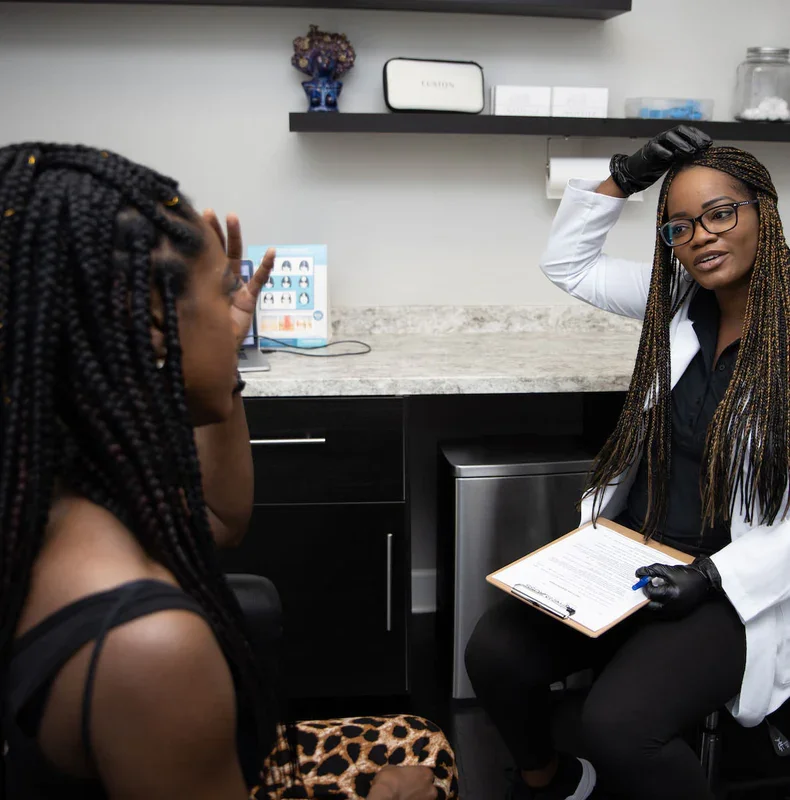
A detailed medical, medication, and hair care history — including styling practices and product use
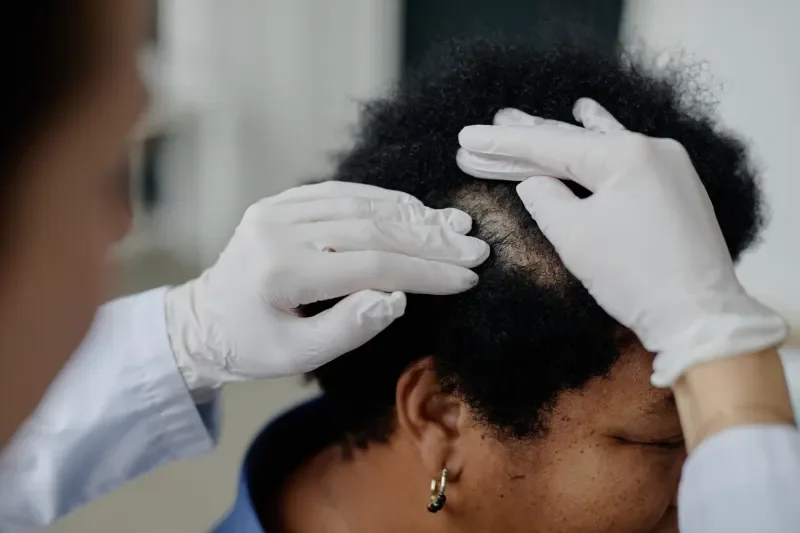
Scalp examination under dermoscopy to assess the follicular pattern and degree of inflammation or scarring
Assessment of any scalp symptoms such as tenderness, burning, or itching
Targeted lab work to rule out contributing systemic causes including thyroid dysfunction, iron deficiency, vitamin D deficiency, and hormonal imbalance
Scalp biopsy when a scarring process is suspected or the diagnosis is clinically unclear
A biopsy taken early, before significant scarring has occurred, can confirm the type of hair loss and guide treatment decisions in a way that prevents years of ineffective trial-and-error treatment.
Frequently asked questions
Q: Can CCCA hair loss grow back?
In areas where the follicle has been permanently destroyed by scarring, hair cannot regrow. This is why early diagnosis and treatment are so critical — the goal is to stop the progression and preserve the follicles that remain. In early CCCA, halting progression and preventing further loss is achievable with appropriate treatment
Q: Is traction alopecia reversible?
In most cases, yes — if caught before scarring occurs. With timely treatment and style modification, significant or complete regrowth is possible. In cases where tight styling has been practiced for many years without any treatment, some permanent thinning may remain.
Q: How is CCCA different from regular hair thinning?
CCCA is a scarring condition — meaning it permanently destroys hair follicles. Regular hair thinning from androgenetic alopecia or telogen effluvium does not destroy follicles. The distinction is critical for treatment planning, which is why dermoscopy and sometimes biopsy are important diagnostic tools.
Ready to make your hair a priority?
Cutis MD accepts new patients for hair loss evaluation and treatment — including patients presenting for the first time, those who have a prior diagnosis but are not responding to current treatment, and patients seeking a second opinion. In-person appointments are available at our Vinings location, and virtual consultations are available for patients throughout Georgia.