


Pigmentation & Melasma
Dark spots, uneven tone, and persistent discoloration require a careful, nuanced approach — especially in melanin-rich skin. Expert diagnosis and treatment for melasma, PIH, and more. Serving Vinings, Buckhead, Cumberland, and greater Atlanta.
Understanding pigmentation disorders
Not all dark spots are the same — and treating them effectively requires knowing exactly what you’re dealing with. The most common pigmentation concerns Dr. Marcelus evaluates include melasma (hormonally-driven patches on the face), post-inflammatory hyperpigmentation or PIH (from acne, eczema, injury, or any skin irritation), solar lentigines (sun spots from UV exposure), drug-induced hyperpigmentation, and vitiligo. Accurately identifying the type and depth of pigmentation is the essential first step — because the wrong treatment for the wrong type can make the condition significantly worse.
Melasma in skin of color
Melasma disproportionately affects women with darker skin tones — Fitzpatrick types IV through VI — and is significantly more common in women of Black, Latina, Asian, and Middle Eastern descent. It presents as symmetrical gray-brown or brown patches, most commonly on the cheeks, upper lip, forehead, and nose. Melasma is a chronic condition that requires long-term management — not a one-time treatment.
What makes melasma particularly challenging in melanin-rich skin is the aggressive inflammatory response that many treatments can trigger. Chemical exfoliants and some topicals can paradoxically worsen pigmentation in darker skin tones if not chosen correctly. Dr. Marcelus uses evidence-based, conservative protocols that prioritize consistent improvement over quick fixes that rebound.
Post-inflammatory hyperpigmentation (PIH)
PIH develops when skin inflammation — from acne, eczema, a scratch, a rash, or even an aesthetic treatment — triggers melanin overproduction in the healing tissue. In patients with more melanin, this response is faster, more pronounced, and longer-lasting. PIH that fades within weeks in a lighter-skinned patient may persist for months or years without treatment in a patient with darker skin.
Frequently asked questions
Is melasma permanent?
Melasma is a chronic condition that can be effectively managed but not permanently cured. With consistent treatment and sun protection, most patients achieve significant and sustained improvement — but the condition can recur with hormonal changes or UV exposure without ongoing maintenance.
Can chemical peels make my dark spots worse?
In the wrong hands, yes. Peels that are too aggressive or not calibrated for your skin tone can trigger PIH in melanin-rich skin. At Cutis MD, peel selection is specific to your Fitzpatrick type.
Do I need a prescription for effective treatment?
Over-the-counter brightening products can support treatment but rarely produce meaningful results on established melasma or deep PIH on their own. Prescription-strength topicals and professionally supervised protocols are typically necessary for significant, lasting improvement.
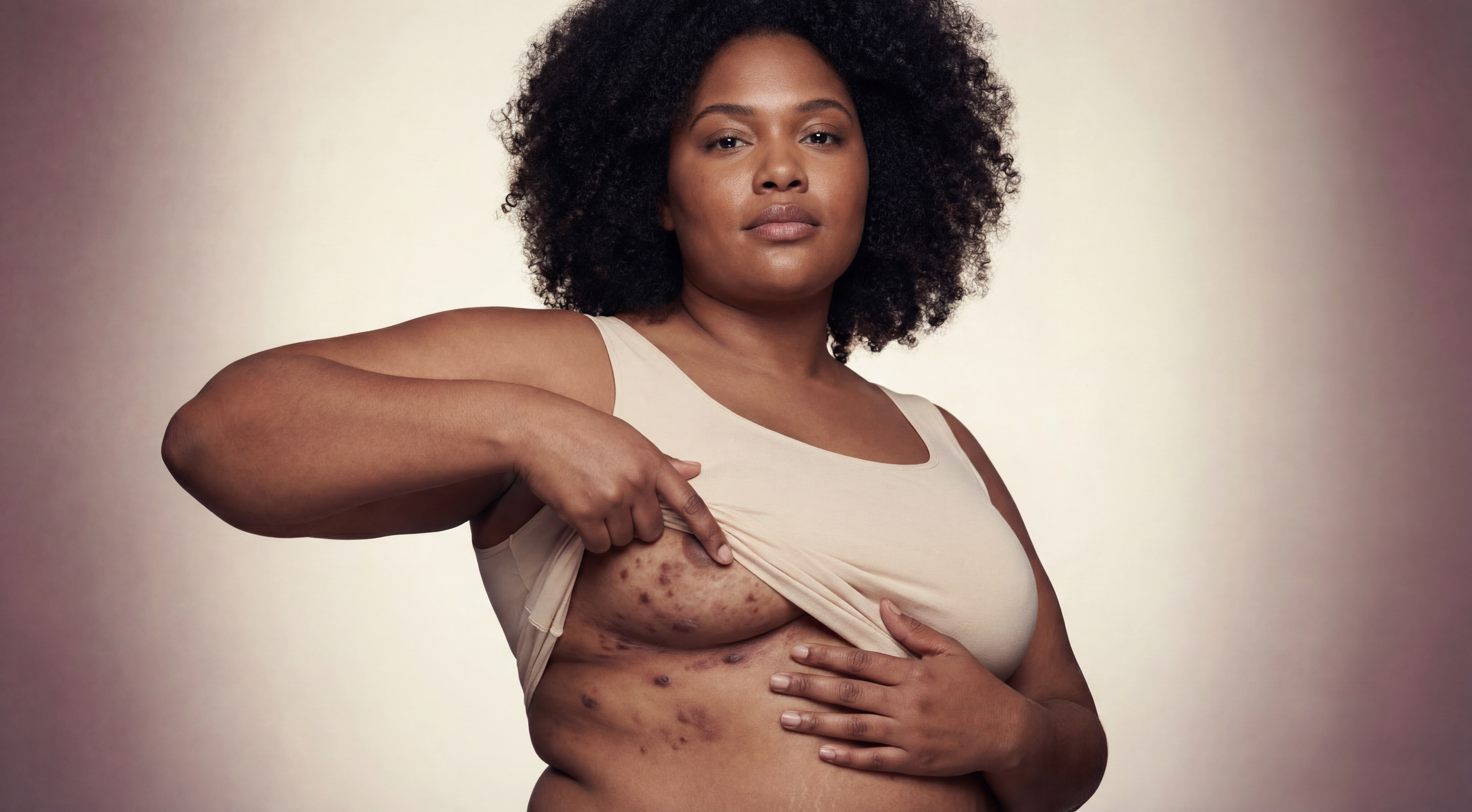
How do I treat HS?
Welcome to a space designed for ideas that move people. With a focus on quality, clarity, and connection, we're here to help you make an impact that lasts.